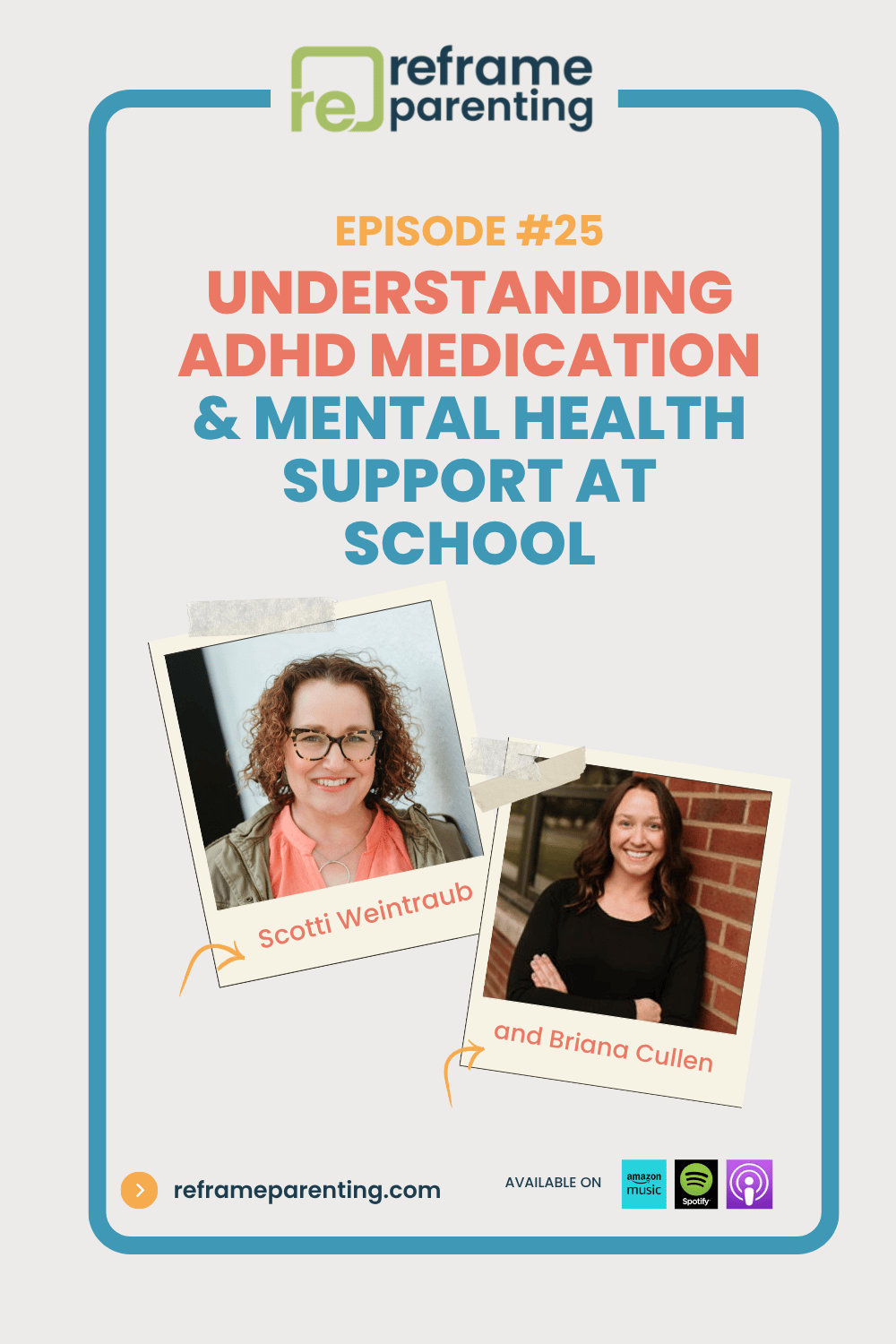
25: Understanding ADHD Medication & Mental Health Support at School with Briana Cullen
Ever leave a school meeting wondering if you’re “doing enough” for your kids… and also somehow feel like your “doing it wrong”?
In this episode of Unlocking School Success, I’m joined by Brianna Cullen, a pediatric psychiatric mental health nurse practitioner in Southern Oregon, to talk about what parents really need when a child is struggling: support, clear information, and a partner who won’t pile on the guilt.
Brianna breaks down what psych NPs do, why access to care can be especially tough for rural families, and how she helps parents think through medication decisions (especially for ADHD) as one tool in a bigger toolbox—not a forever decision and not a moral judgment.
We discuss stigma, side effects, trial-and-error, looping in teachers for feedback, and why early treatment can improve functioning and reduce longer-term risks.
Key Takeaways:
Medication decisions should be based on impact: academic, social, home life, and overall quality of life.
Medication isn’t “the answer”: it’s one tool alongside therapy, school supports, and family resources.
Start low and go slow: side effects are real, and kids need close monitoring and follow-up. Teachers can be valuable partners because they see your child’s functioning all day long.
ADHD treatment (including stimulants) is highly stigmatized, but untreated ADHD can carry serious long-term risks.
Ask your child how they feel: kids can often describe benefits and side effects if we give them the chance. Because Nothing is final, some families adjust medication seasonally (like during school transitions) or take breaks.
Resources:
SkyLake Psychiatry and Behavioral Health Clinic (Southern Oregon) — referral-based; telehealth available in Oregon
Gifted and Distractible: Understanding, Supporting, and Advocating for Your Twice Exceptional Child by Julie F. Skolnick (book recommendation)
Connect with Scotti:
Website
Instagram
Threads
LinkedIn
Ask a Question:
Got a school question on your mind?
Submit it as a listener question for a future episode
Transcript
25: Understanding ADHD Medication & Mental Health Support at School with Briana Cullen
Brianna Cullen: [00:00:00] parents really just don't wanna feel alone. They don't wanna feel guilty for coming to the office and making these appointments for their kiddo and making these really hard decisions.
Sometimes that requires medication and sometimes it doesn't.
Scotti Weintraub: Welcome to Unlocking School Success, a podcast with the smart strategies and support parents need to help their kids thrive. I'm your host, Scotti Weintraub, parent coach, school navigator, and your go-to guide for turning School Stress and Chaos into clear strategies that work. Let's get started.
Hello and welcome back to another episode of Unlocking School Success. I love having guests on my podcast and today's is a special one. I've got Brianna Cullen. She is a pediatric, psychiatric mental health nurse practitioner. Is that right?
Brianna Cullen: Yes.
Scotti Weintraub: Did I get that correct?
Brianna Cullen: I know it's a mouthful, but yes, you did.
Scotti Weintraub: Yes. And she happens to [00:01:00] also be an Oregonian, and so I'm pleased to bring another Northwest voice onto the podcast. Hi, Brianna.
Brianna Cullen: Hi, thank you. I'm so excited that we have connected in this way, and thank you for this opportunity to be here and, share my experience. I'm from Southern Oregon, so you're up north of the state and kind of at the bottom, but I'm so glad that we crossed paths
Scotti Weintraub: Yes.
And I love what you do. And let's start there because people listening might know that there are lots of different mental health providers that we can find for our kids, but what specifically do you do?
Brianna Cullen: Yeah. So in Oregon, I'm gonna just start at, a more broader perspective, but Oregon psychiatric nurse practitioners we can actually treat the lifespan, right?
Our schooling generally is all ages, all age groups. I have a specialty focus with pediatrics and adolescent psychiatry. And I work at Sky Lake [00:02:00] Psychiatry and Behavioral Health Clinic in Southern Oregon and Klamath Falls. And our demographic is rural health, a lot of underserved populations.
We have a lot of trauma. We have a lot of people from adverse backgrounds. And so I do still see a handful of adults, But for the most part, my population focus is the pediatric and adolescent group. In working with that population, I collaborate a lot with community resources available to our parents or our families specifically.
I collaborate care with schools, collaborate care with pediatricians and really kinda have a tendency to lean on being just that support person for the parent or caregiver in general, because a lot of times what I've found is that's really what they want is just somebody to support them and, listen to them because when their child is struggling it is very overwhelming and taxing emotionally.
Really, I just try to lean in and be the best support person that I can be [00:03:00] while also providing child and adolescent psychiatric services.
Scotti Weintraub: You know that I am so pleased that you do this work because I know exactly how isolating it is to be a parent of a child that struggles.
And when you find a provider that can be that source of support for your child and for you, it is worth its weight and gold. So thank you for that. I'm not sure a lot of people listening n- know that psychiatric mental health nurse practitioners exist.
Brianna Cullen: Really?
Scotti Weintraub: I'm always surprised when I suggest, because people will say I'm trying to find a psychiatrist or a medication provider for my child."
And they don't often know that this specialty of nurse practitioners exists, and at least in Oregon, they also have m- medication dispensing capacity.
Brianna Cullen: Yeah. And actually that's a really good point because under our scope it varies state to state, and Oregon is one where fortunately we do have [00:04:00] prescribing privileges.
The system that I work under, we have psychiatrist who happens to be child- child and adolescent psychiatrist who's wonderful. But she does, we do collaborate a lot of medical decisions with her. So while in Oregon, we do have the ability to practice autonomously some systems still require or they set in place some sort of collaborating physician for where I'm at, most of it, I do, I make a lot of my decisions on my own but it is, for those complex cases, very beneficial to have a collaborating psychiatrist or physician to be able to consult with.
So that's interesting that you say that a lot of people don't know that a psych nurse practitioner exists because I often hear on the other side of it that there's too many of us and- ... I kinda chuckle at that because, even in our area in rural Southern Oregon, we [00:05:00] still are just lacking.
There's not enough help for everybody in need, so it's interesting that perspective.
Scotti Weintraub: Yeah. I would say that the need, oh, at least for the folks that I talk to, the need for outstrips availability of providers. So I'm just thrilled that there are options, for access to care because as a parent, trying to find them, either you encounter long waits or, in the case of rural families, maybe they have long distances.
So it can be hard to access the care that you know your child might need or, and be able to find that with a different kind of provider, I think just adds to the pool of great people out there helping families,
Brianna Cullen: Yeah, that's actually part of the reason I went into this field is I always had a passion for mental health and never in a million years thought I would wanna work with children specifically, but I was blessed with a [00:06:00] wonderful daughter who sent me on my own journey in trying to find that help.
And it's been pretty difficult in a rural area. And then I also have a young son who also has different medical complexities, but, living in a rural community and having to travel for specialty services or a lot of our appointments are telehealth, which, thank, I'm thankful for telehealth because that's helped a lot.
But, and then finding somebody that doesn't have a year-long wait list-
...
Brianna Cullen: When your child needs help and so I just wanted to add to that. I wanted to be a resource and be available for families like me, like mine and help parents along the way because I know how that feels.
It's very difficult. It's expensive. Not everybody has the means, especially in our area, they don't have the means to travel to long distance appointments or maybe, telehealth isn't always 100% reliable. So there's other challenges [00:07:00] there. And I grew up in Klamath Falls, so it's even more personal that I want to bring services, to a place where I grew up into a community that I care about.
Scotti Weintraub: I love that. And it's challenging. I grew up in a rural area too, so I'm very familiar with those kinds of challenges. So I appreciate you bringing that up because I know folks listening, not everybody lives in a city, not everyone has access to care. And so being able to provide that in communities that are lacking is so very important.
I wanted us to chat too a little bit about medications, because this is a piece that I get questions about, and not that I'm a medical provider, but I get concerns from parents around, should I Medicate, should ... And especially when it comes to school, because sometimes they might be getting feedback that perhaps medication could help in challenging school situations.
So talk to us a little bit about how do you advise a parent who comes to you wondering about in the, in the case of [00:08:00] ADHD, anxiety, a number of different scenarios where they're considering would medication help and when might it be helpful in terms of school challenges? Maybe those are two different questions.
Brianna Cullen: Yeah, no. So as providers, we always look at the degree to which our child is affected. So what is their current level of functioning, academic functioning, social functioning, what's home life like? What are their behaviors like emotional outbursts? Is it causing distress to the family? When parents come in or caregivers and they ask about medication, there's always a hesitancy because there's a lot of guilt and there's shame there.
There's a large stigma that is placed on medications in children specifically. Even myself as a parent, when, I had weighed the pros and cons of, "Do I need to medicate my child?" And it's not a decision that a provider or any teacher should make for a family. It really needs to be a family decision and [00:09:00] also the kiddo's decision as well.
So education is key. In school if there's behaviors that are very disruptive and it's impeding on a child's ability to learn maybe they're not able to stay in school, they're missing days, maybe grades are falling behind that would be, an indication for possibly medication.
In children, we always start low and go slow because every medication has side effects. It's also important to know that every medication available to us for children and adolescent specifically it's never 100%, it's always just a tool, right? So making sure the family is set up with therapy services and what other resources can we connect them with.
I think when parents ask me that question and I just I think I, I speak a lot from the heart though because I know how that feels when, to feel shameful when you ask about meds. Just supportive communication and education and give them every [00:10:00] option, give them, education material that is easy to understand and read educate on potential side effects, and loop the teacher in as well.
Teachers see the children all day long and I love when I can have, straightforward communication with educators or other staff about, "Hey, is this medication working or is it not working?" Their insight is very helpful, actually. And medication isn't for everybody, again, it's just a tool and, but if it can help, the earlier we treat any behavioral challenge in young children, the sooner we can instill positive coping skills, therapy will never work if they lack the capacity to sit there and learn the skill, right?
And we see that with kids with ADHD specifically the ability to take in information, process it in a way that makes sense and remember to utilize it is actually really hard for a child with ADHD. And a person without ADHD, it might seem so simple, but really [00:11:00] it's a very significant challenge that has, great impact on a child's ability to learn specifically and do their job, which is to be in school and, learn and do what's expected of them from their teachers, right?
But did I answer your question?
Scotti Weintraub: Yes, of course you did. I think you brought up a couple of really important points. One being that it's one tool among many.
Brianna Cullen: Yes.
Scotti Weintraub: That it isn't the end all to be all, right? So I think that's helpful framing for me as a parent to think about it as just another tool that we can try, that it's not forever right?
If it's useful, we can, fine tune it or that there are lots of options.
I think it can feel like medication is, you're going down this rabbit hole that you can never get out of, but really, it is a tool to try.
Brianna Cullen: Yeah. The whole trial and error piece of medication is exhausting.
I think even just for adult patients because in psychiatry, we don't have a blood [00:12:00] test or, medical imaging that can tell us exactly, what's going on. And so we require a lot of different types of collateral information from educators, from neuropsych evaluations, from just everybody that is involved in the child's life.
And so it can feel very much like a, like drug out trial and error process. And just really ... I think because I know that and I've experienced that and continue to experience that, support really just goes a long way. And so I always try to, reassure my parents just send me a message, just call me.
I do really try to be there for them because side effects can be scary when they're seen in a young child. Medications can produce stability, and then all of a sudden we're having a really bad day and, what the heck? And, just reminding them that not every single day is going to be perfect even anybody's gonna have, good days and bad days.
I [00:13:00] think our goal is to improve the level of functioning and, quality of life. And that's where medication can kinda help with being able to absorb things that are being taught to us. We can use ADHD, for example, and stimulant medication is heavily stigmatized but children with ADHD, untreated, are at very high risk for substance use they're impulsive, so perhaps they run into legal problems, it's recommended that we target and stabilize symptoms and get them treated before the age of nine to prevent or decrease their risk.
And if we can do that they have a better chance. Otherwise, for a child with untreated symptoms it's easier for them to fall into that that more maladaptive path, if that makes sense.
Scotti Weintraub: It does. And I think that's a really important point to consider for families [00:14:00] that, using this tool can also make them more able to succeed in school, and with that comes m- more success to be able to build on it.
And I liked that you mentioned what level of impact is this challenge having on them at school or at home, and using that as a judge too, that if we're seeing severe challenges and the impact is that they're not able to access their education because they're not able to get to school or they're having trouble, so much trouble focusing that they aren't able to learn.
I think that's something for parents to take into consideration too.
Brianna Cullen: Yeah, for sure. Just speaking again from personal experience with my own daughter, she's twice exceptional. So she's got very high intellectual abilities but pretty significant challenges in the way of executive functioning with, an ADHD.
And while she's very [00:15:00] smart her challenges have caused problems in the school setting, right? So it's just, it's really hard for parents to ... I never want a family to feel as if they are relying on medication, to make their child better. First of all, nothing is ever wrong with the child, right?
And my goal is always, "I know this is hard. I'm here to walk with you. We can, we have this available. We can try it, " and, and also providing encouragement to the child too, because if you think about it even for a grownup they're going to all these appointments and maybe they're in a trial and error and that's exhausting.
Can you imagine being a young child and also doing that because you know something's wrong with you, but you don't really know what and you can't really identify it, but my parents are bringing me here, I need medication. It's just very overwhelming for everybody and, i- in the clinical setting, I really do try to support both family and the child, if they bring a positive [00:16:00] really, that is great, praising that and because they need to feel good about themselves.
And even if the progress is little it's still praiseworthy. And I do find that just, emotional support really does go a long way. It goes further than medication a lot of times, but we can recommend parent management training or, family therapy all day long, but if the child isn't able to sit there, because they're hyperactive or even have the ability to process, take in and then process, two separate things, the information provided to them it's, it doesn't really go very far.
Scotti Weintraub: So you're ... I think what you're describing is that a- again, seeing it as a tool that this tool can help kids be able to access-
...
Scotti Weintraub: That information, that processing, that executive functioning in a way that they might not otherwise?
Brianna Cullen: Yes.
Scotti Weintraub: So if a parent came to you and they were nervous about the potential of [00:17:00] using a medication as a tool, what might you say to that family?
Brianna Cullen: I think that it is ... Let's just use stimulants, for an example. I think, it's not ... It's very reasonable to be scared as a parent. If you think of a stimulant medication and the stigma associated with that, and I use the stimulant because it is the first-line treatment for ADHD, right?
And very highly stigmatized. So when the parents come in and the child is seven or eight, that just seemed like a very taboo thing to do. This is where education, on, on the literature, what does the literature say? What are the risk factors of not treating? How long have these medications been around?
And what is the expected outcome, and what do we ... If it's a benefit to the child, what do we want to see? Side effects, specifically with stimulants include cardiac side effects, fast heart rate or [00:18:00] even chest pain, worst case scenario. And so when a parent hears things like that, it can be terrifying.
And it's a controlled substance, also terrifying. There's just multiple things behind that. And a lot of times when parents come in seeking medication, they're in a desperate, vulnerable situation at that point, so just as a provider, it's so important to be mindful of that and providing them with just any type of literature that, that, that can go behind the medication and the benefits and what's been studied what are the risks, like I had mentioned earlier, if, it goes untreated, what are non-stimulant options, of course and give them those options as well.
A lot of parents, are asking about supplements too, and supple- supplements, I wish that I had more, evidence-based information backing. There's so many brands of supplements, right? And from my experience, I do think that most supplements will do what they're marketed to do, [00:19:00] if you believe it well or it is, but just knowing that pa- the family is in charge, they have the options giving them multiple things to choose from, not making them feel forced that they have to be on the medication. It's just, part of their toolbox. This is what I have available and this is what, the research says works and supporting their decision no matter what.
So if they choose, to not pursue medication, that should be supported. And, then how can I support you on that venture? We'll follow up, but can I, how can I collaborate with the school or the teachers or the counselor? What can we all do to support the child if we choose to not go the medication route?
It should never be, it should never feel like it is a forced thing. It ultimately should be a confident and safe decision that is made together, on behalf of the child.
Scotti Weintraub: I love that you lean so strongly into that partnership [00:20:00] with families- ... because that, I think, is what also builds trust.
And if it's the right time and the right decision for medication, then that's one decision, but it could be that it's not, or that you come back around to it at another time.
Brianna Cullen: Exactly. Yeah.
Scotti Weintraub: So none of it is a final decision.
Brianna Cullen: No. And when we talk about ADHD, a lot of the symptoms, the exacerbation of ADHD can be seasonal, I like to say.
Anytime there's an adjustment like the start of school or during a break, and so just really letting parents know that this isn't forever, some people with ADHD, yes, have to take medication for several years of their life, right? But in other incidences, summer breaks come in, let's try not having medication and let's just, not worry about it for a little bit and give everybody a break.
There's always that option too. And I think that's what I ... ADHD is tricky, but, since I do treat a handful of adults as well, and unfortunately, I do get them in office [00:21:00] and there's a large of them, a large amount of them do have, comorbid conditions, substance use, addiction, et cetera.
And so as somebody who treats primarily kids, I really try to do a lot of education on that because even with meds, so if, let's say we start a child on medications early, they get older, right? They're getting older, they're getting older. Oh, now they can make their own decisions. And not that they weren't part of the decision before, they should always be part of the decision, but now they don't wanna take medication, so I actually try to discuss, how ... and with the child, how is this medication helping you? What do you notice? Is it causing you any side effects? And they will tell you I think it gives me a headache." Or I think it, dampens my creativity," for example.
I children will tell you if you just ask them. And I think a lot of us adults forget to just ask the child, their experience and it is, they c- they can tell you in their own way it's valuable, you
Scotti Weintraub: can- Yes. [00:22:00] I think that's true in so many ways as a parent that just asking our kids can be, can bring such insight and we forget that's true.
Brianna Cullen: Yeah. Yeah. It's it's so hard. I think ... I don't know. I have a lot of families too that, grandparents are taking care of kiddos and, they ... every family comes in, every caregiver comes in with their own set of challenges with the exception, with their child behavior problems aside.
So you really have to also consider what's going to work for this family. Somebody once told me, you're treating the family, which you really are. And so that's why, assessing the level of functioning and impact it is doing, or what's going on with parents, what's going on with caregivers what is this, what is the negative impact, and how can we support you, the whole family?
Sometimes that requires medication and sometimes it doesn't.
Scotti Weintraub: Right.
Brianna Cullen: But I love child psychiatry because it's just parents really just don't wanna feel alone. They [00:23:00] don't wanna feel guilty for, coming to the office and making these appointments for their kiddo and making these really hard decisions.
They need to know that they're not the only family. There's lots of families just like them. And, together if you have the support and somebody to actually listen, it really does go a long way with or without medication,
Scotti Weintraub: yes.
Brianna Cullen: It really does.
Scotti Weintraub: I think that is a beautiful place to wrap up.
Because it is so true that it feels isolating, it can feel lonely, and to find a care provider who partners with parents, whether that involves medication or not is just so valuable. So if someone is listening and they think, "I would love to find someone who can do that kind of partnering," where might families look to find whether that is a psychiatric nurse practitioner or another kind of provider, where might they look?
Brianna Cullen: [00:24:00] Yeah. A quick Google search is always easy, but, calling around and actually taking the time to call the clinic, call multiple clinics, not just call one, find out wait times, just read the backgrounds. Most websites will have the provider background on the website and, maybe just speaking from personal experience, but you can kinda get a feel of, what type of provider is this?
Do I feel like ... Are they gonna be able to advocate for my child? Are they up to date on child and adolescent psychiatry? Trends, Friends, research new medications coming out, et cetera. All those things are really important. I also would recommend, start with a pediatrician. Pediatricians usually have somebody in their wheelhouse that they can coordinate with or recommend, and just start from there.
Talk to friends, family colleagues and word of mouth, I think when somebody falls into the hands of a real, a really good provider or clinic and has had a good experience people are willing to share that with other people.
Scotti Weintraub: Yes. I have certainly [00:25:00] referred people to providers I found especially youthful in the past.
So I think the more we can talk about all of this, and we try not to feel the stigma as much about talking about it, because I know that part's hard, too. The more we can find those really good resources-
Brianna Cullen: Yeah. ...
Scotti Weintraub: for families, because you don't, if you don't know that they're out there, if we start talking to our friends, to our neighbors, to our colleagues about, what support you need, you'd be surprised at how often people will have a resource to share.
Brianna Cullen: Absolutely. Yes. I do know for myself I do belong to a couple of networking groups and it is often shared, "Hey, i- if we can't take on a patient, we will ask colleagues within the group, can anybody, this is, can it ... Is anybody taking patients? Is anybody taking this age group or, or somebody's moving to this state or, so there is that kind of provider to provider handoff as well, if that reassures families at all.
Scotti Weintraub: Yes. I have ... I guess I will just add, don't [00:26:00] be afraid to ask if someone has a long wait list or isn't as close to patients. Sometimes I've had success with saying who else do you refer people to? " Yeah. So finding that sort of chain reaction of referrals can be really helpful.
Brianna Cullen: Yes, absolutely.
Absolutely.
Scotti Weintraub: It has been such a pleasure to have you. And if folks are in the Southern Oregon area, where can they find you or your colleagues?
Brianna Cullen: Yeah. SkyLake Psychiatry and Mental Health Clinic is newer. Newer clinic, we've been open a few years. We actually just went through a name change as well.
So we are seen by referral only at this point in time by PCP or whoever, but we do take telehealth patients and from all over Oregon, actually, I can think of a couple patients I have from other cities and even in less rural communities. It, it never hurts to ask, and I'd be happy to chat with you.
Scotti Weintraub: I'll put the link to your practice in the show notes but I just like to wrap up all of my guest [00:27:00] conversations by asking if there's something that you're reading or someplace that you point families to for more information discussion on these issues that we're talking about.
Brianna Cullen: Yes. First of all, your podcast has actually been really helpful for me as a parent but I do, I have referred them to your podcast as well.
Scotti Weintraub: Thank you. That makes me so happy.
Brianna Cullen: It's so easy and convenient. And I love all your different guest speakers. But my daughter, she's twice exceptional, so I am reading Gifted and Distractible by Julie F. Skolnick Understanding, Supporting, and Advocating for Your Twice Exceptional Child.
Scotti Weintraub: Ooh. And now that's a new one for me, so I'm gonna put it on my reading list because I think the, there's the subheading hits on a couple different things about understanding and advocating, so-
Brianna Cullen: Yeah.
It's actually, it's a really good book. And it's allowed me to kinda look at my daughter through a different lens "Oh, that makes so much sense."
So it's been a good read. It's relatively easy [00:28:00] as well.
Scotti Weintraub: Okay. I'll put a link to that in the show notes too. And as always, I love having guests to talk about these really interesting topics that I hope are of use to all the families out there listening.
Thanks so much for being with me.
Brianna Cullen: Thank you for having me.
Scotti Weintraub: It's been another really great conversation on unlocking school success. If you have found value in my conversation with Brianna, I hope that you will review, hit follow along or send your friends our way because I know that there are lots of families out there who could use this kind of support.
Thanks for joining me, and we'll see you next time.
Thanks for tuning in to Unlocking School Success. If you're finding these episodes helpful, please hit follow, leave a review, or send it to another parent who's also navigating the school maze because no one should have to figure this out alone. You'll find full show notes@reframeparenting.com slash podcast and you can come say hi on Instagram at Reframe [00:29:00] Parenting.
Thanks again for listening. See you next time.